
CUSTOMER SUCCESS · CPG & GROCERY DISTRIBUTION

How Cortes Distributors connects field sales, picking, and lot-controlled inventory.
An evidence-backed look at how one wholesale grocery distributor coordinates a broad catalog, 900+ active customer accounts, multiple warehouses, and high-volume fulfillment with inSitu Sales.
Reviewed by Pablo Gil, CEO of inSitu Sales. Pablo was involved in the project implementation and has reviewed this article.
Rounded operational metrics corroborated against inSitu Sales platform data; confidential financial values are excluded.
THE OPERATING REALITY
A broad grocery catalog creates complexity far beyond taking an order.
Cortes publicly offers a wide mix of beverages, canned goods, meat, condiments, cookies, flour, grains, juices, dairy, refrigerated products, snacks, and sweets. In that environment, a sales rep needs current customer, product, availability, and pricing context—while the warehouse needs a structured signal that tells the team what to pick, where to find it, and which lot is involved.
The operational challenge is keeping field activity, orders, invoices, fulfillment, inventory, and transfers synchronized as volume grows. An outdated price, stock mismatch, missed item, wrong location, or disconnected handoff can become a customer-service issue and back-office rework.
Visit the Cortes Distributors websiteTHE CONNECTED WORKFLOW
One order moves through four coordinated moments.
The business value continues after the rep taps submit. The same structured demand becomes the foundation for warehouse execution and inventory movement.
Serve the customer in the field
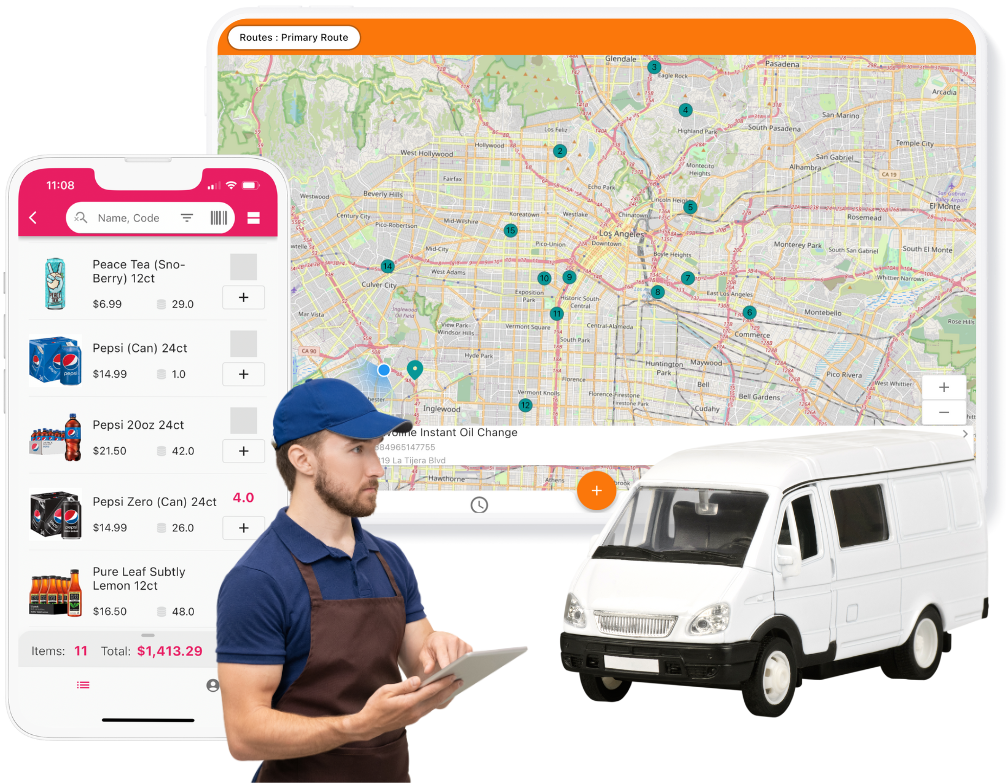
Reps work from the customer profile, route context, catalog, availability, price lists, and order history.
Capture structured demand
The order enters the operation cleanly, without requiring a separate paper or spreadsheet handoff.
Fulfill by warehouse, bin, and lot
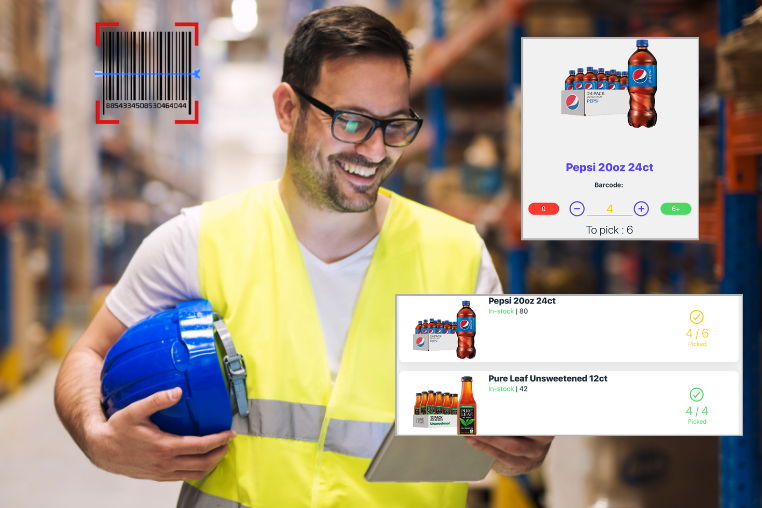
Pick-list detail connects products to the warehouse locations and lot context the team needs.
Track inventory movement
Transfers, invoices, credits, collections, and route activity remain connected to the customer workflow.
WHAT THE USAGE SHOWS
inSitu is supporting an order-to-warehouse operation—not only a mobile order pad.
Million-plus ordered and invoiced product units in the study period establish the commercial scale. The warehouse detail shows where the operational story becomes distinctive.
OPERATIONAL FOOTPRINT
See how customer demand becomes warehouse execution.
These visuals describe corroborated usage and data depth. They are not a conversion funnel or a claim of guaranteed performance improvement.
Operational scale across the customer, order, picking, and warehouse workflow.
The percentages describe record coverage, while the totals show the depth of the warehouse model.
WHY IT MATTERS
Growth without disconnected handoffs.
For field sales
Reps can work from customer history, a searchable catalog, price lists, product availability, and route context while they are with the buyer.
For the warehouse
Orders become structured pick workflows with product, warehouse, bin, and lot detail instead of being retyped or interpreted from paper.
For operations
Transfers, invoices, credits, collections, and customer activity remain connected to the operating record managers use to understand execution.
The bigger lessonFor high-volume distributors, “more sales” cannot mean more operational chaos. The advantage comes from connecting the route, the order, the warehouse location, the lot, and the back office in one traceable workflow.
BUILT FOR CPG DISTRIBUTION
Relevant across the product mix Cortes serves.
This breadth supports searches around grocery, food, beverage, snacks, confectionery, dairy, refrigerated, and multicultural CPG distribution—not only the customer name.
RESULTS METHODOLOGY
Evidence-backed, with confidential details protected.
This case study uses a June 30, 2026 snapshot of Cortes Distributors’ inSitu Sales records, rechecked on July 1, 2026. Figures describe historical operating scale and record coverage; they do not measure time saved, error reduction, or a before-and-after productivity improvement. Figures are rounded, and confidential financial values are excluded.
Measurement periods. Pick lists cover records from March 1, 2026 through the June 30 snapshot. Pick-detail lines, ordered and invoiced product units, and the bin/lot coverage percentages cover January 1, 2026 through that snapshot. Customer, product, warehouse, bin, and lot totals describe the account configuration at the snapshot. Transfer totals are cumulative records available at that time. Field-activity events are cumulative from February 27, 2026 and are not counts of unique completed visits.
Metric definitions. “Active” means the record was not marked disabled in the source system; it does not establish recent use or positive stock. Saleable products also carry the saleable setting. A pick list is a warehouse picking document, and a pick-detail line is an individual record within that document. The counts include records not marked disabled, rather than only completed picks. Bin coverage means a pick-detail record contains a bin-location reference; lot coverage means it contains a nonempty lot value. These percentages measure recorded context, not verified picking accuracy.
The story focuses on workflows supported by the available evidence, including field activity, ordering, warehouse picking, bin and lot control, inventory transfers, and invoicing. Financial values and other commercially sensitive information are intentionally excluded.
CASE STUDY FAQ
Questions buyers and search engines need answered.
What distribution workflows does Cortes use in inSitu Sales?+
Corroborated operational data supports field sales, customer coverage, order entry, invoicing, warehouse picking, bin locations, lot numbers, stock transfers, multiple warehouses, price lists, and collections workflows.
Does the Cortes case study publish financial sales figures?+
No. Financial sales values are intentionally omitted. The story uses operational scale such as active customers, saleable products, warehouses, pick lists, detail lines, bins, lots, transfers, and product-unit movement.
How were the Cortes case-study metrics validated?+
The case study uses a June 30, 2026 platform-data snapshot, rechecked July 1, 2026. The methodology identifies the periods and record definitions. Figures are rounded, exclude financial values, and describe operating scale and record coverage rather than measured performance improvement.
Why are bin locations and lot numbers important for grocery distribution?+
They give warehouse teams more precise inventory context than a SKU-level quantity alone. Bin locations support where-to-pick execution, while lot records support traceability for perishable and other lot-controlled products.
READY TO CONNECT FIELD AND WAREHOUSE?
Map your distribution workflow with inSitu Sales.
Bring your customer, catalog, warehouse, route, and back-office requirements.